When I first entered the IT world, I started looking at everything I experienced through a completely different lens. One perfect example of this is Formula 1. For five years, I’ve been watching Formula 1 and enjoying its incredible moments — the thrill of the start, the dramatic crashes, and the high-stakes pit strategies. It is perhaps one of the most creative sports that humanity has ever created, where so many parameters come together.
However, having watched this sport for five years, I am not only drawn to these exciting moments but also fascinated by how an incredible technology works in the background. Most sports have just two teams and a referee who can manage, stop, and calculate the score. But F1 is a sport where 20 drivers and 10 teams race non-stop for approximately an hour and a half on a circuit. Even during stoppage moments like yellow flags and pit stops, there is a complex tactical battle between teams. This means that in a single second, millions of data points are collected, managed, and displayed to the viewers, the people in the garage, and the drivers.
In this blog post, I will explore the specific IT services and technologies that support this sport, helping to transform it into one of the most-watched sporting events in the world.
AWS and Machine Learning Technology
An F1 car is like a moving data center. Each car has over 300 sensors that generate 1.1 million data points per second. This data is transmitted from the cars to the pit lane. Every car uses a standard Engine Control Unit (ECU), which controls important parts of the vehicle like the engine, brakes, and tires.
All of this real-time data is stored in the AWS cloud and sent to multiple places instantly:
- The Event Technical Center: This is the on-site broadcasting center for the race. AWS processes the raw data here to create the live graphics we see on TV.
- The Teams: Teams receive this data to use with their own systems. To read and analyze this information, they use special software. For example, McLaren uses a system called ATLAS, while Mercedes and Haas use RaceWatch. Team managers look at these data screens to make quick tactical choices during the race.
The Pit Strategy Battle
AWS does not just store this massive amount of data. It also uses AWS SageMaker, which is Amazon’s machine learning service, to predict race strategies and results.
Pit strategy plays a huge role in Formula 1. By the rules, every driver must enter the pit lane at least once during a race to change tires. When a driver enters the pit, a big tactical battle begins.
AWS SageMaker helps by calculating the best time for a pit stop. It analyzes live traffic on the track, tire wear, and rival speeds to show exactly where the driver will be when they return to the track. Thanks to machine learning, both teams and viewers can see in seconds whether a pit stop strategy will succeed or fail.
Predicting the Chase: Battle Forecast
Another great example of AWS machine learning on our TV screens is the Battle Forecast. When one driver is chasing another, we often see a graphic that says something like: “Striking Distance: 5 Laps.”
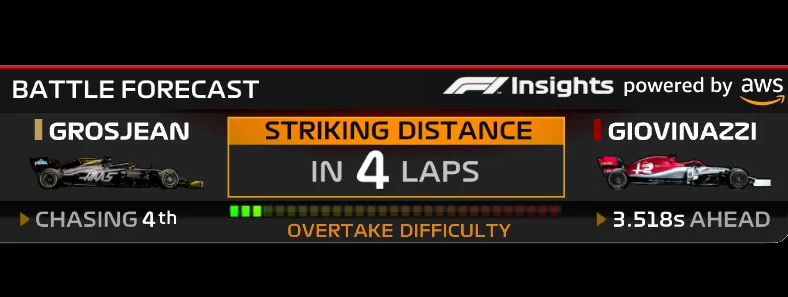
AWS SageMaker makes this prediction by analyzing historical track data and live telemetry from both cars. It looks at the current gap, tire histories, and how fast the chasing driver is gaining ground. It then calculates exactly how many laps it will take for the driver behind to catch up and try an overtake. This technology gives viewers a clear look into the future, making the battle on the track even more exciting to watch.
Beside this, AWS has many other services that convert huge amounts of data into live graphics within seconds, making the race much more enjoyable for the viewers.
Salesforce: Driving Fan Engagement and Connectivity
In recent years, the global Formula 1 fanbase has exploded to an estimated 827 million people, fueled significantly by the success of Netflix’s Drive to Survive and the relentless engineering drama on track. To manage and connect with this massive audience, Formula 1 partnered with Salesforce as its official CRM and fan engagement platform.
Salesforce acts as the central brain for F1’s marketing and fan experience. Whether a fan is using the official F1 app, subscribing to F1 TV, buying merchandise, or reading the weekly newsletter, Salesforce gathers these fragmented data points into a single profile. This allows Formula 1 to deliver highly personalized content, tailored exactly to a fan’s favorite team, driver, or location.
Beyond standard marketing, Salesforce elevates the ecosystem in two major ways:
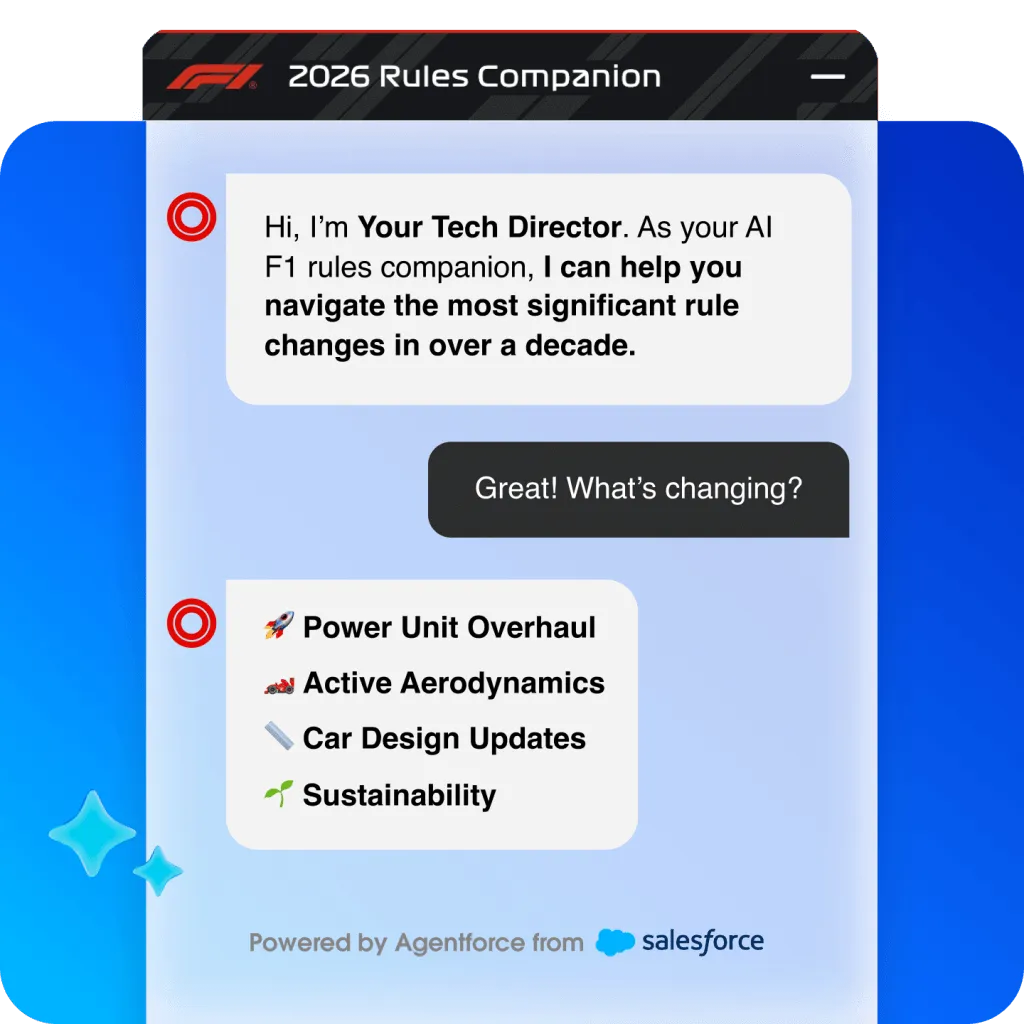
- Hyper-Personalized AI with Agentforce: Leveraging Salesforce’s latest autonomous AI technology, Agentforce, F1 can now deliver real-time, customized race updates directly to fans’ phones based on their favorite drivers. Furthermore, it acts as an intelligent assistant, instantly answering fans’ complex technical questions about F1’s ever-changing sporting and technical regulations.
- Team Collaboration via Slack: Communication within this fast-paced sport is critical. Slack (a Salesforce company) is heavily integrated into the daily operations of multiple F1 teams and organizations, streamlining communication between trackside engineers, factory staff, and media teams.
Oracle and Red Bull Racing: The Billion-Simulation Brain
As Red Bull Racing Team Principal Christian Horner famously noted:
“Data is the lifeblood of our team.”
Red Bull recognized this shift early on, forming a landmark partnership with Oracle in 2021 to turn massive data streams into world championships. While AWS manages the underlying infrastructure for the entire F1 sport, Oracle Cloud Infrastructure (OCI) specifically supercharges the engineering, marketing, and race strategies of Red Bull Racing. In a sport where outcomes are determined by fractions of a second, success is never a coincidence — it is engineered.
According to Hannah Schmitz, Red Bull’s Principal Strategy Engineer, Oracle’s cloud computing power has allowed the team to run 25% more simulations than previously possible. Before and during a race, the strategy team uses OCI to simulate billions of scenarios — modeling tire degradation, sudden weather shifts, and rival pit windows. This immense processing speed gives the pit wall the statistical confidence to make high-stakes decisions instantly, such as calling a perfect pit stop or choosing the right tire compound at the exact right lap.
Oracle’s technology also extends far beyond the pit wall and into the hands of the fans. Red Bull’s official loyalty platform, “The Red Bull Paddock,” is powered by Oracle’s data solutions. It unifies fan data to deliver personalized digital experiences, rewards, and exclusive content to millions of fans worldwide.
Oracle is far from just a sticker on the side of a Red Bull car; it is the technological engine of their modern dynasty. Powered by these cloud technologies, Red Bull has transformed data into sheer dominance on the track, helping Max Verstappen secure 4 World Drivers’ Championships and propelling the team to 3 Constructors’ Titles since their partnership began.
Google Cloud and Gemini: The Generative AI Revolution
Following the immense success of the Oracle-Red Bull partnership, the rest of the grid quickly realized that winning in modern Formula 1 requires becoming a data company. Chief among them is McLaren Racing, which leveraged Google Cloud to engineer a masterpiece of a car and mount a fierce challenge against Red Bull’s recent dominance. This tech-driven resurgence propelled McLaren to a Constructors’ Championship two years ago, followed by a spectacular World Drivers’ Championship title last year.
While Red Bull relies heavily on raw cloud computing power for statistical simulations, McLaren takes a distinctly different tech path: Advanced Artificial Intelligence and Large Language Models (LLMs).
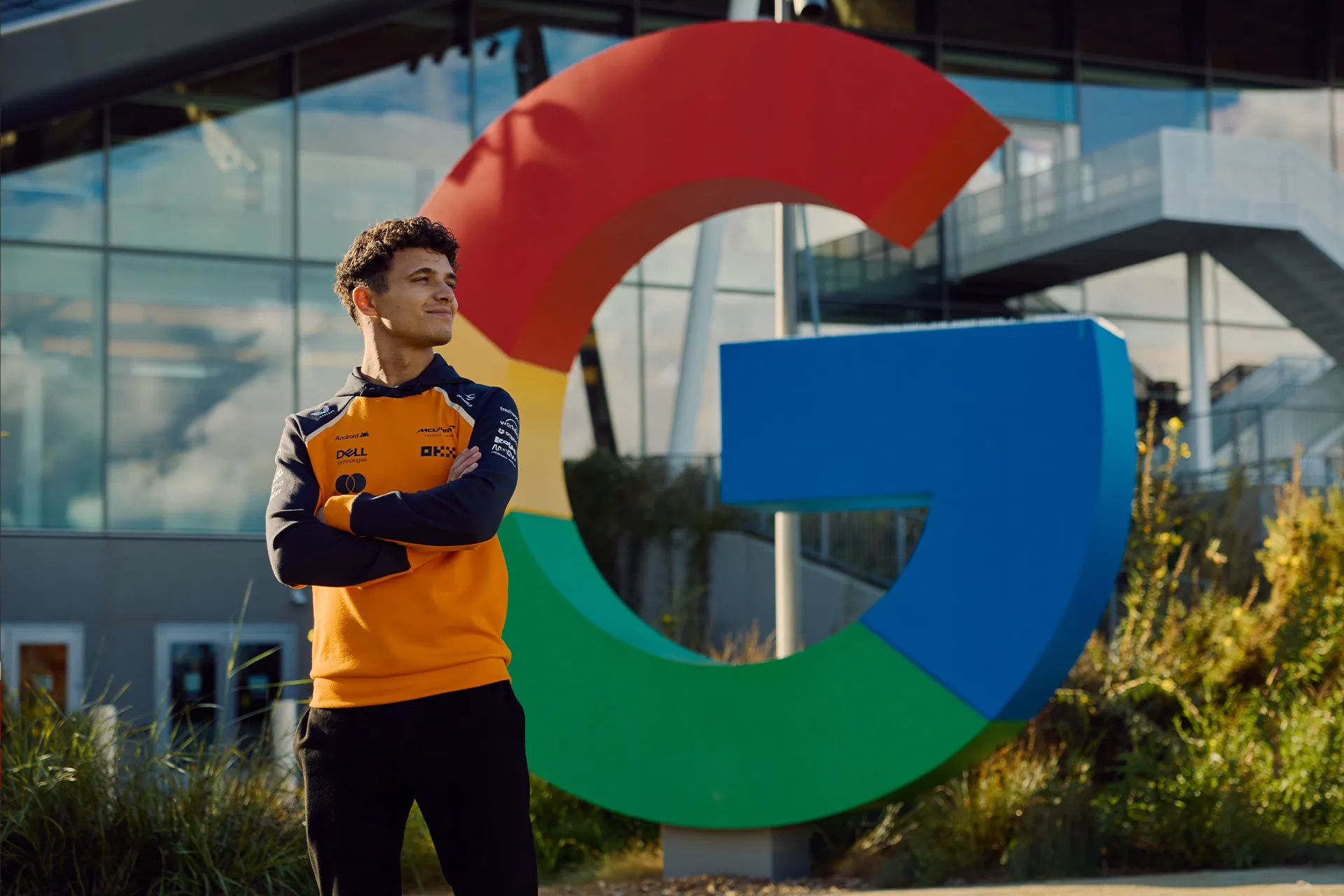
By utilizing Google Cloud’s Vertex AI and Gemini models, McLaren doesn’t just run traditional “what-if” scenarios — they train massive AI models to predict race outcomes with unprecedented nuance. When every millisecond matters, McLaren Racing uses AI to help track its drivers, cars, pit, and even radio chatter for every advantage possible.
Conclusion: The Human Element in a Data-Driven World
Of course, when we look at the modern grid, we aren’t just watching a battle between drivers — we are watching a war between global technology giants. Some people argue that this heavy reliance on data and cloud computing creates too wide a gap between teams.
Yet, no matter how many millions of data points are processed in the background, or how many billions of simulations are run on the pit wall, the ultimate destiny of a Grand Prix still comes down to the human parameter.
When the lights go out, an AI cannot feel the degradation of the tires through the steering wheel, nor can a cloud server replicate the sheer courage required to pull off a 200 mph overtake in the rain. Technology can provide the perfect map, but it is still the driver who must navigate the edge of human limits.